
Last updated November 21, 2026
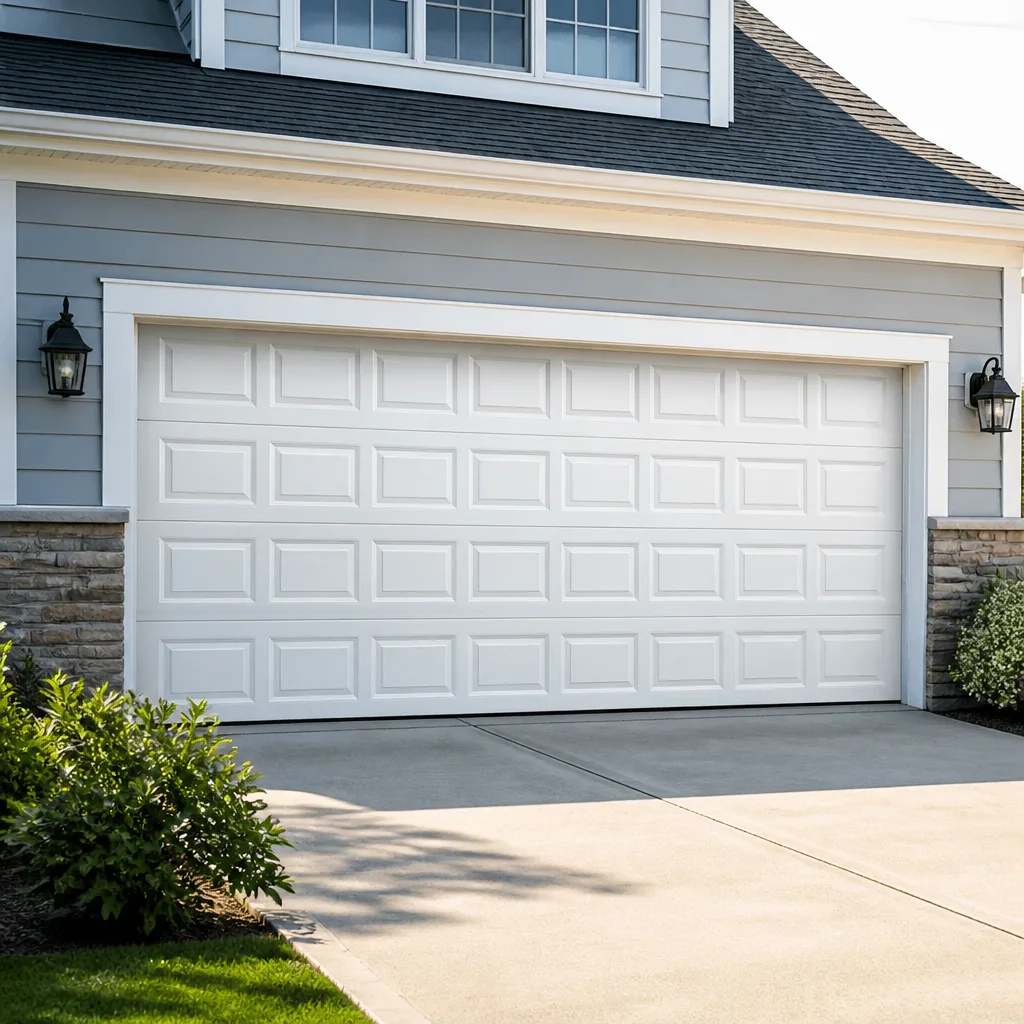 Raised-panel steel
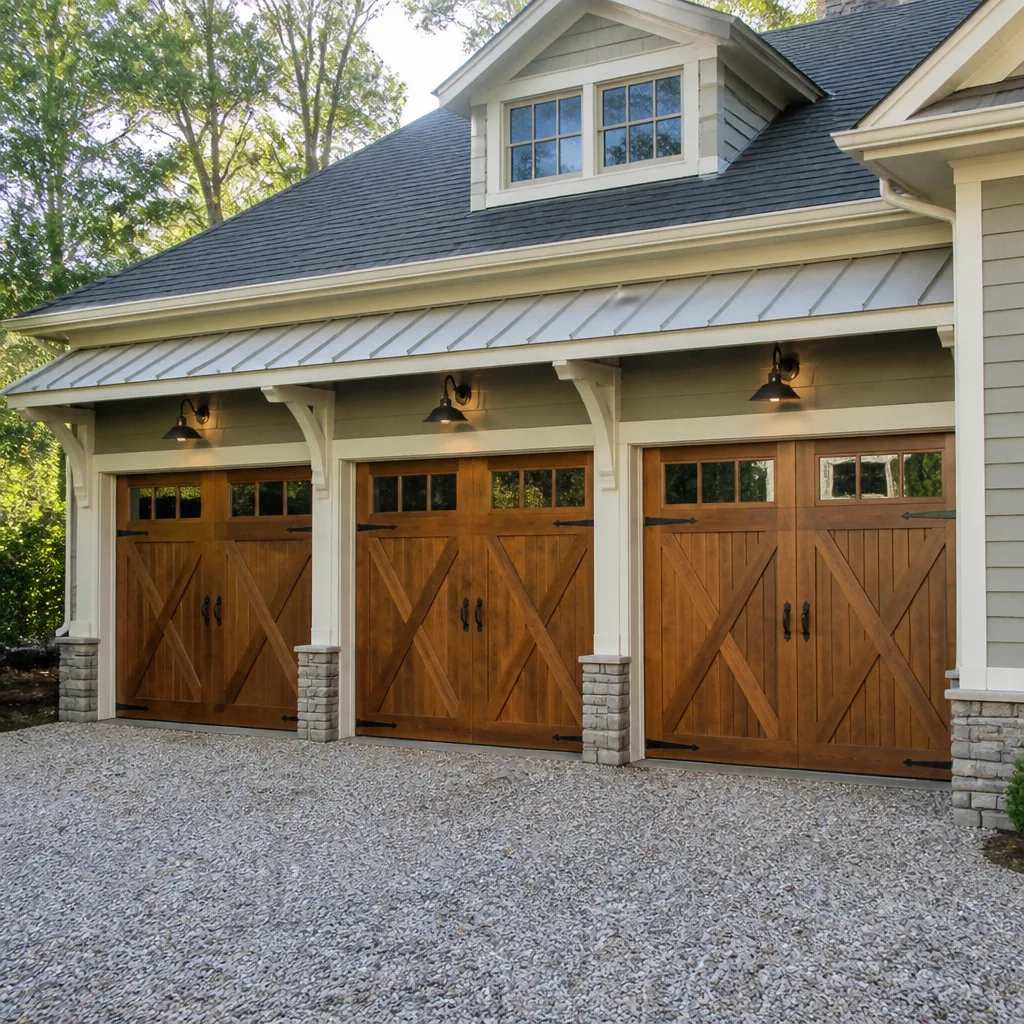 Carriage house
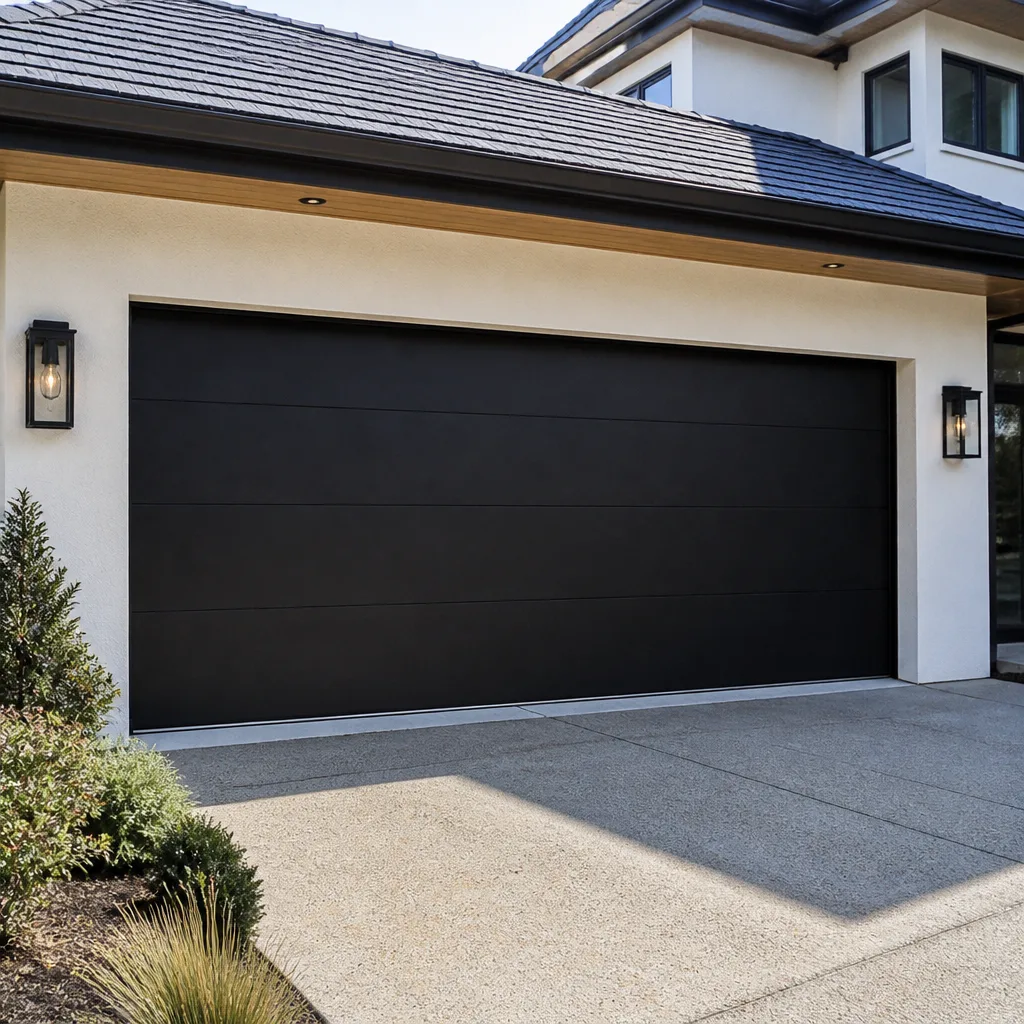 Modern flush
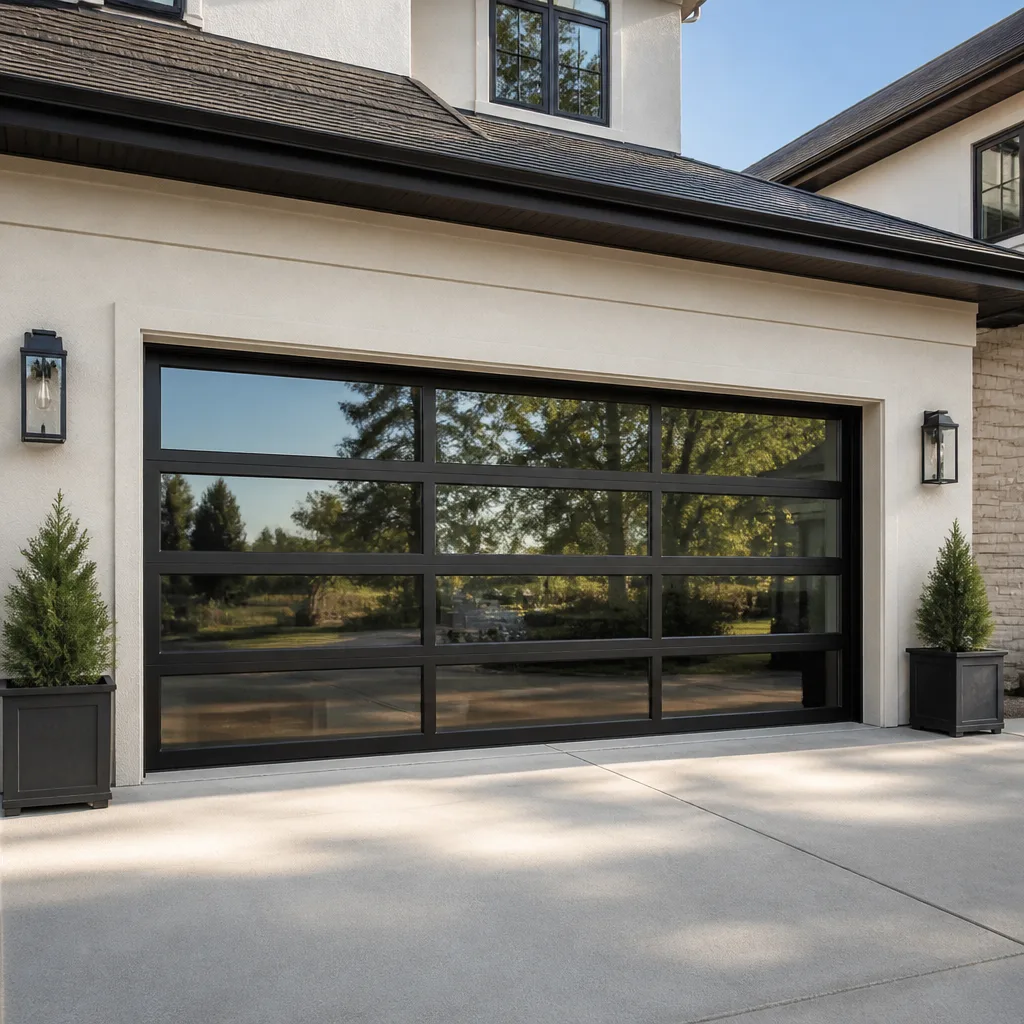 Full-view glass
 LiftMaster openers
 Chamberlain openers
Full 25-point door and opener safety check with every visit - springs, cables, rollers, tracks, and your LiftMaster or Chamberlain opener included
You get a price before we start. It does not change when the pro arrives.
Get your free estimateSeasonal Garage Door Care for Kent: Year-Round Homeowner’s Guide
Most garage door maintenance advice you’ll find online is written for someone shoveling a driveway in Minnesota. Kent doesn’t work that way. Our rainy season and our dry season do the damage here, and the two transitions that matter most are October, when sustained rain settles in, and late August, when the valley heat has been baking the same hardware for months. If you time your checks around those two shifts instead of an arbitrary spring-and-fall checklist, you’ll catch the failures that actually happen in Kent. This guide walks through both transitions, plus the quieter checks in between, in plain terms.
Quick Answer
Garage door care in Kent should be built around two seasonal transitions rather than four: prep in late September and early October before the sustained rain starts, then a heat-recovery check in late August when the dry season has stressed the opener and springs. Between those, a light monthly inspection of the seals, track, and balance keeps small problems from turning into repair calls. The spring and opener work that matters most is safety-critical, so leave the actual adjustment and replacement to trained technicians.
Styles & brands we work with
- Raised-panel steel
- Carriage house
- Modern flush
- Full-view glass
- LiftMaster openers
- Chamberlain openers
Table of Contents
- Why Kent’s Seasons Don’t Follow the Usual Schedule
- October Prep: Getting Ready for the Wet Season
- Late Summer: Why Dry Heat Stresses Your Opener
- The Spring Tension Check Worth Doing Before Summer
- Clearing and Treating the Track After Winter Debris
- The Ten-Minute Monthly Inspection
- Your Kent Seasonal Task Calendar
- Repair or Replace? Reading the Signs
Why Kent’s Seasons Don’t Follow the Usual Schedule
Kent gets a lot of rain, but steady rain isn’t what wears out a garage door. Rapid humidity swings do more damage than a long wet stretch, because the materials in a door and its hardware expand and contract at different rates. When a dry August turns into a wet October, wood bottom seals take on moisture faster than the metal above them, cable corrosion accelerates, and the door starts to bind in ways it didn’t a month earlier. That’s the pattern worth planning around.
The other thing that surprises homeowners moving to Kent from colder parts of the country is that winter cold isn’t the main enemy here. We get frost and cold mornings, sure, but the valley location means we don’t see the coastal moderation that keeps Puget Sound shoreline towns milder in summer, and we don’t see the deep freezes that make ice the dominant problem farther inland. What we get is a long dry stretch that bakes hardware, followed by a sudden wet stretch that tests every seal at once.
So the maintenance schedule that actually works in Kent has two peaks, not four evenly spaced quarters:
- The wet-season onset (late September through October): seals, weatherstripping, cables, and anything that holds moisture out.
- The dry-heat peak (August into early September): opener electronics, spring tension, and lubrication that’s dried out over the summer.
- The quiet months in between: a short monthly walk-around, nothing more.
If you only do two things all year, do those two. Everything else in this guide is secondary to getting the timing right at those transition points. If you’re partial to a full-service garage door company to handle the heavy checks, that’s a reasonable way to stitch together a schedule you’ll actually keep.
October Prep: Getting Ready for the Wet Season
The single most valuable garage door task in Kent happens in the four to six weeks before the sustained rain season starts. Once the wet weather settles in, small seal failures get harder to spot and harder to fix, because everything stays damp. Get ahead of it in late September or early October and you’ll spend far less of the winter chasing water intrusion.
Here’s the order that makes sense, worked top to bottom so you’re not fighting gravity:
- Walk the bottom seal end to end. Press it with your thumb along its full length. It should feel pliable and spring back. Wood bottom seals are common on older doors in Kent and they’re the first thing to crack when the dry season flips to wet. If it’s stiff, cracked, or leaving daylight gaps, that’s the priority.
- Check the weatherstripping around the sides and top. Look for gaps, tears, or hardened rubber. Anywhere you can see light or feel a draft is a leak waiting for the first heavy rain.
- Inspect the cables for corrosion. Run your eyes down each cable where it wraps the drum at the top corners. Light surface discoloration is normal; frayed strands, rust pitting, or a cable that looks stretched are not. Cables are under extreme tension and are a trained-technician job, so note what you see and don’t touch them.
- Lubricate the moving metal parts. Hinges, rollers, and the torsion bar bearings take a light coat of a garage-door-specific lubricant. Avoid heavy grease that holds dust through the winter.
- Clear the floor track channel. Debris and leaves collect there over the summer and hold moisture once the rain starts. A dry brush and a shop vac is all it takes.
If your door is a Wayne Dalton or a Raynor model with a wood-composite bottom section, pay extra attention to the seal check. Those materials are durable but they respond to moisture swings more than a plain steel bottom panel, and the October transition is exactly when you’ll see the evidence. We work on the brand you already have, so a worn seal doesn’t mean a new door.
Late Summer: Why Dry Heat Stresses Your Opener
Here’s the one that catches Kent homeowners off guard: by late August, the heat has been working on your opener’s electronics for months, and the failure shows up as an opener that randomly stops, reverses, or loses its remote pairing. It’s not a coincidence that opener logic board failures cluster in the dry-heat stretch. The components inside the housing run warm in normal use, and a garage that’s been sitting in valley heat for weeks adds to that. When the board gets hot enough to misread its own sensors, the symptoms look a lot like a worn-out motor.
What you can do about it is mostly about airflow and cleanliness:
- Clear the space around the opener head. Boxes stacked to the ceiling near the unit trap heat and block the airflow it needs. Give it a foot of breathing room.
- Vacuum the vents and housing. Dust and cobwebs clog the cooling vents over the summer. A quick pass with a vac nozzle fixes it.
- Check the safety sensor alignment. Sunlight and heat can shift the sensor brackets slightly. If the door reverses for no reason, this is the first thing to check, and it’s a safe homeowner check.
- Test the wall button and remotes. If the wall button works but the remotes don’t, that’s usually a pairing or battery issue, not the logic board.
If the opener is a smart-home model from LiftMaster, Chamberlain, Genie, or Craftsman, a random disconnect from the app in late summer is often a heat-related board symptom rather than a Wi-Fi problem. Don’t replace a connected opener just because it drops offline for a week. When the diagnostics point to the board, that’s what a trained technician is for, and it’s why we handle garage door opener repair on both legacy and current smart-home-integrated systems, so a heat-stressed board gets diagnosed rather than swapped out for a whole new unit.
The Spring Tension Check Worth Doing Before Summer
The force balance check is the most underrated seasonal task in this guide, and it’s the one to do right before the heavy-use summer stretch. Springs that survived the winter may have lost tension quietly, and a door that’s running heavier than it should is putting extra load on the opener while you use it most. The check itself is simple and safe: with the opener disconnected by pulling the release cord, lift the door halfway by hand, let go, and see if it stays put. A balanced door holds its position. A door that drifts back down is running heavy, and the springs are usually the reason.
What you must not do is try to adjust or replace the spring yourself. Torsion and extension springs store enormous energy, and spring repair is a two-person, proper-tools job. The wrong move releases that energy, and the injuries that result are serious. Our technicians have up to 15 years of experience, and good spring repair is done by trained technicians with the right winding bars and a second set of hands, every time.
If the door holds its balance but the springs look worn or you hear a single loud crack from the garage, stop using the door and get a professional out. A snapped spring leaves the door heavy and unsafe to operate by hand, and the opener can’t compensate for it. Our garage door repair handles spring replacement alongside door and opener work, which means you’re not coordinating a second contractor for a job this specific.
Clearing and Treating the Track After Winter Debris
Winter in Kent brings grit, small gravel, and leaf litter into the track channel, and it’s easy to let that slide until the door starts dragging. The track is a simple system: two vertical rails, two horizontal rails, and a curved transition at the corner. Debris in those channels causes the rollers to bind, which causes the door to run crooked, which wears the rollers faster. Clearing it in the spring is worth the twenty minutes.
Here’s how to do it without making it worse:
- Use a dry brush and a shop vac. Get the grit and leaves out of the bottom of each channel first. Don’t hose it out; water in the track sits and starts rust.
- Wipe the rails with a dry cloth. If there’s grime, a slightly damp rag followed by a dry one works. Don’t leave moisture behind.
- Check the rollers. Nylon rollers should roll freely without flat spots; steel rollers should turn without grinding. A stuck roller is a quick replace for a technician.
- Check the track for bends or misalignment. Look down the length of each rail from the closed position. Any kink or outward bow in the channel means the door will bind, and a bent track needs to be straightened or replaced.
The one thing to avoid: don’t spray anything on the galvanized track itself. Galvanized hardware has a thin zinc coating that does its job on its own, and oils, WD-40-type sprays, and grease attract grit that clogs the rollers and turns a clean track into a sticky one. Lubricant belongs on the moving metal parts (hinges, rollers, bearings), not on the track surface. If you’ve already sprayed the track, wipe it clean with a dry cloth and leave it bare.
The Ten-Minute Monthly Inspection
A full seasonal overhaul twice a year is the backbone of a good maintenance habit, but the ten-minute monthly walk-around catches the small stuff before it becomes one of those calls. You don’t need tools for most of it. You need a few minutes and a torch or flashlight.
Run these checks once a month, ideally on the first weekend of the month so it becomes a habit:
- Look for daylight around the door. Any light coming through the perimeter means a seal gap. Note where.
- Listen to the door open and close. Grinding, squealing, and rattling mean something’s loose or dry. A smooth, even sound is what you’re after.
- Check the safety reverse. Put a block of wood in the door’s path and confirm it reverses. This is the most important safety feature on the whole system.
- Look for rust and corrosion spots, especially at the hinges and around the bottom corners.
- Check the opener’s light and wall button. Flickering lights and buttons that don’t respond are early warning signs.
Once you’ve done this a few times, it becomes a quick visual sweep, and you’ll spot a problem in the making before it strands you. If you’d rather have a technician run through the same walk-around and fix whatever turns up, a free estimate is the easiest way to know what you’re dealing with. It’s a repair-first approach, so you’re not pushed toward a replacement a maintenance check doesn’t justify.
Your Kent Seasonal Task Calendar
Here’s the schedule mapped to Kent’s actual climate rather than an arbitrary set of calendar quarters. Print it or save it, and work from it through the year.
Late September to early October (wet-season prep):
- Full bottom seal and weatherstripping inspection
- Cable corrosion check (visual only, no touching)
- Lubricate hinges, rollers, and torsion bearings
- Clear floor track channels
- Adjust the opener’s force and travel limits if the door is running stiff
November through February (the quiet wet months):
- Monthly ten-minute inspection
- Watch for water intrusion at the bottom corners
- Keep the track clear of wet leaves
March and April (post-winter cleanup):
- Clear winter grit and gravel from the track
- Check rollers for flat spots and binding
- Inspect the track for bends and misalignment
May and June (pre-summer prep):
- Force balance check on the springs (lift test only, no adjustment)
- Lubricate the moving parts again
- Test safety reverse and sensor alignment
August and early September (heat recovery):
- Clear the area around the opener head and vacuum its vents
- Check for heat-related opener symptoms (random stops, remotes losing pairing)
- Check the springs again before the wet season
This calendar maps closely to the actual failure pattern we see across Kent, from the older homes near downtown to the newer construction on the valley floor. If your door is a Craftsman model with a legacy opener, the August electronics check matters more than most, since older boards are more sensitive to heat. If it’s a modern LiftMaster with a smart-home hub, keep an eye on the app in August and don’t panic if it drops pairing, but do get it diagnosed if it stays offline after a cool morning.
Repair or Replace? Reading the Signs
The question we hear most after a seasonal inspection turns up a problem is whether it means a repair or a whole new door. The honest answer is that most of what a Kent homeowner faces is repairable. A worn bottom seal, a bound roller, a corroded cable, a tired spring, a heat-stressed logic board: these are all fixable, and fixing them is usually the right call. Full replacement is a decision that makes sense when the door’s structure is failing, when the panel is damaged beyond repair, or when the cost of the fix starts to approach the value of a new door.
Here are the signs that point toward replacement rather than repair:
- Multiple panel sections are dented, rusted through, or delaminating. One panel can be swapped; five is a replacement.
- The door has come off the track more than once. Repeated derailments usually point to structural problems.
- You’ve replaced springs, cables, and rollers on the same door repeatedly. The hardware is at the end of its life.
- The opener is on its last legs and isn’t a smart-home model, and you want connected features anyway.
If replacement is genuinely the answer, that’s a measured and scheduled job, not something to rush through on the back of a failed part. Our garage door installation is handled with a free measure and a written price before anything is ordered, so you know what you’re committing to. If you’re not sure which way to lean, a free estimate gives you a straight answer about whether a repair will do the job. That’s the repair-first approach, and it’s the same on a Wayne Dalton, a Raynor, or any of the brands we see on Kent doors every week.
Common Mistakes to Avoid
- Spraying lubricant on the tracks. Galvanized tracks need to be dry. Oil, grease, and general sprays trap grit and make the rollers bind. Lubricate the moving parts, not the rails.
- Doing the spring work yourself. Spring repair is a two-person, proper-tools job. Torsion and extension springs store enough energy to cause serious injury. It’s the most dangerous DIY task on a garage door.
- Waiting until the wet season to check the bottom seal. By the time the sustained rain settles in, water’s already getting in. Check the seal in late September, before the first big storm.
- Skipping the August opener check. Heat-stressed logic boards are the top failure in late summer. Clear the unit’s vents and check the app pairing before the wet season rolls in.
- Ignoring a door that runs heavy. A door that’s hard to lift by hand is putting extra load on the opener every time it runs. Get the springs checked before the opener wears out too.
- Replacing a whole door over a single failed part. Most Kent garage door problems are repairable. A worn seal, a single bad spring, or a heat-stressed board doesn’t require a new door.
- Forgetting the safety reverse test. It’s the most important safety feature on the system. Test it monthly, not once a year.
See the difference
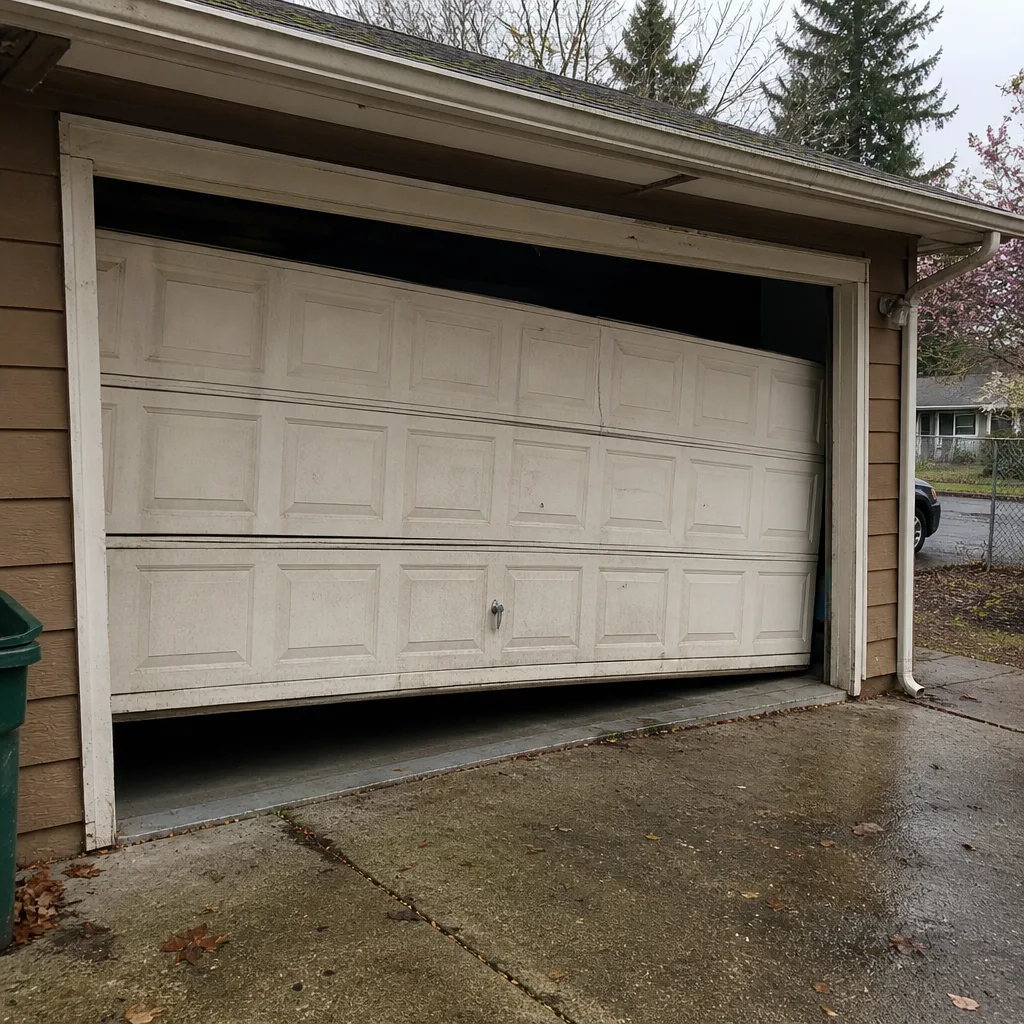 Before
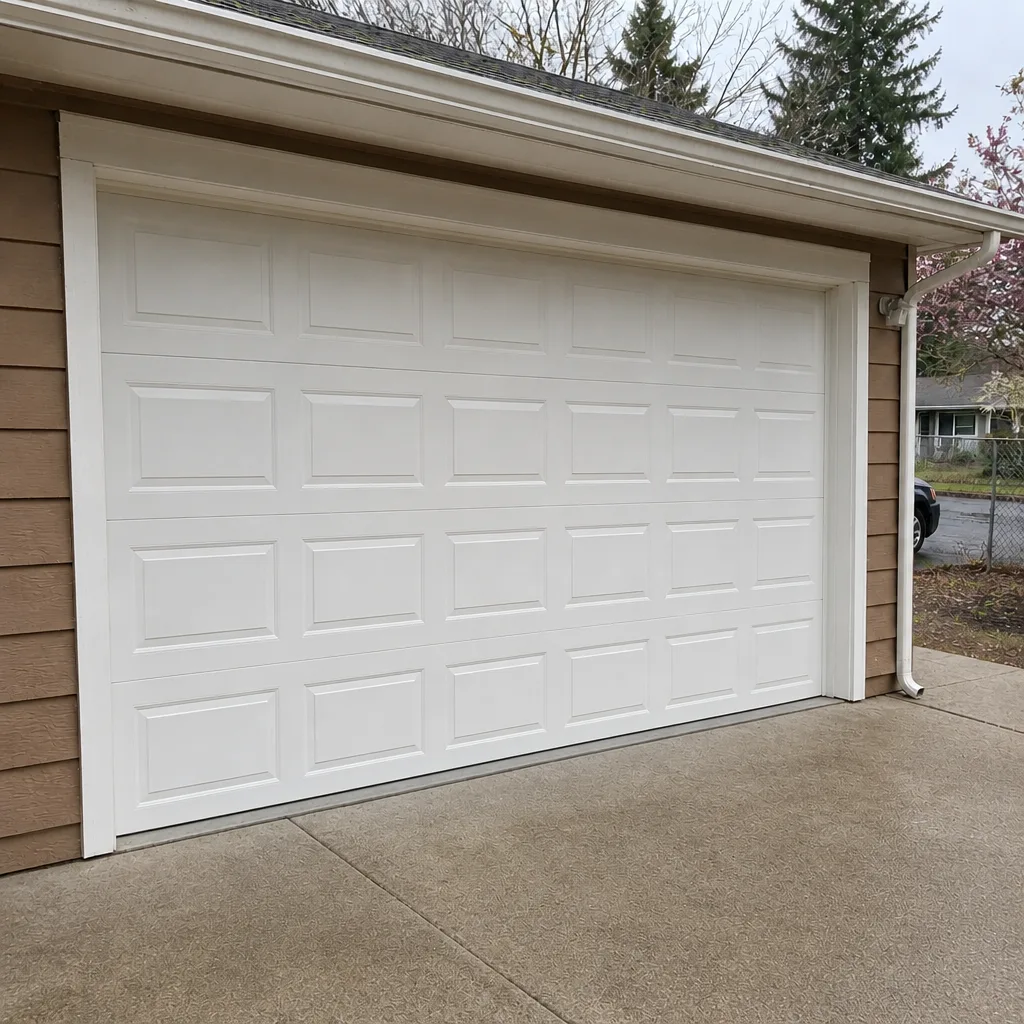 After
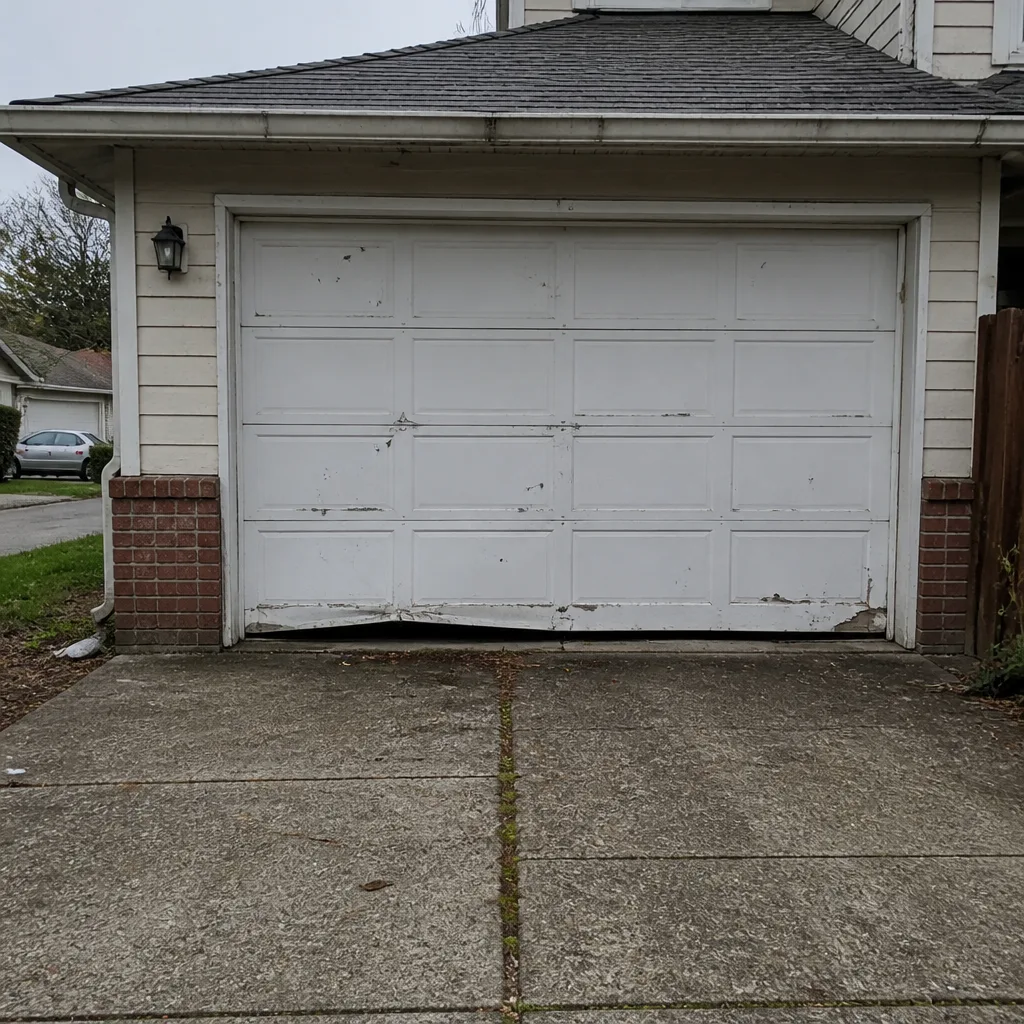 Before
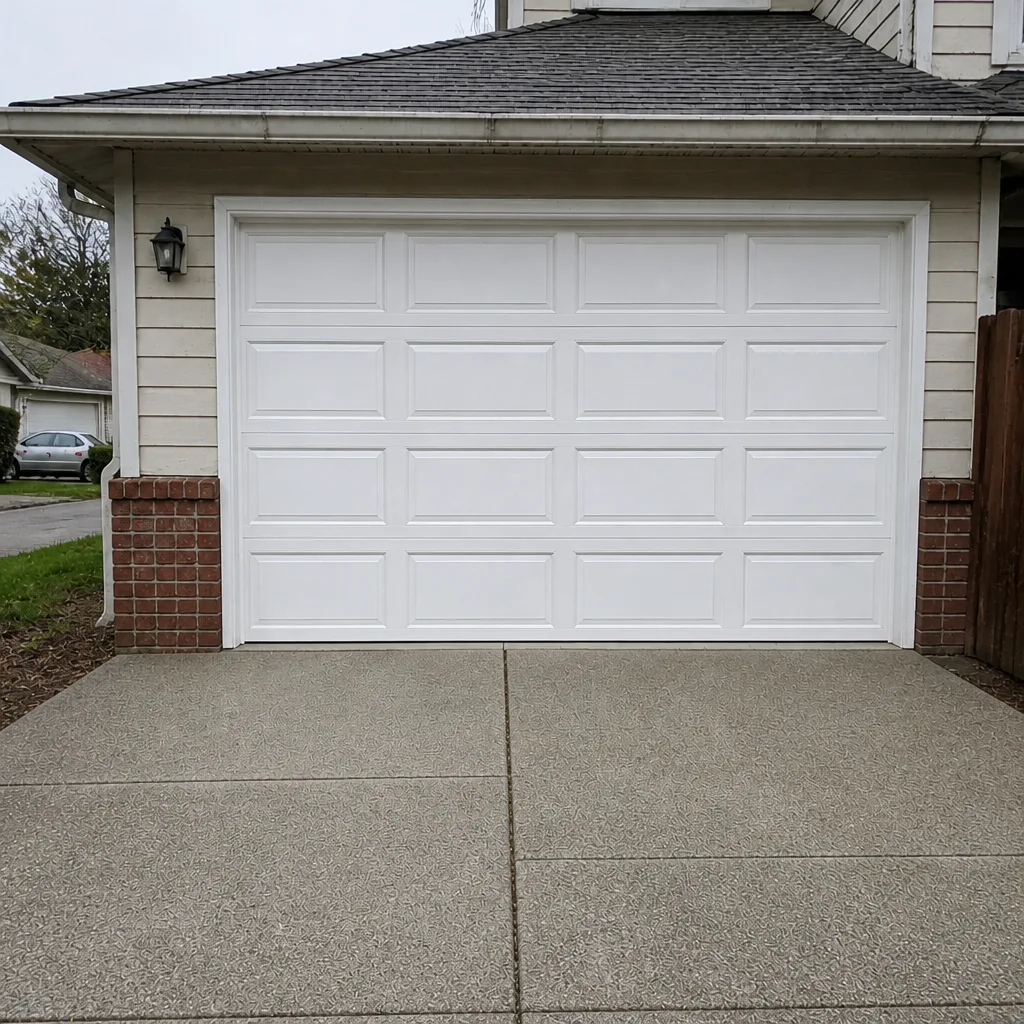 After
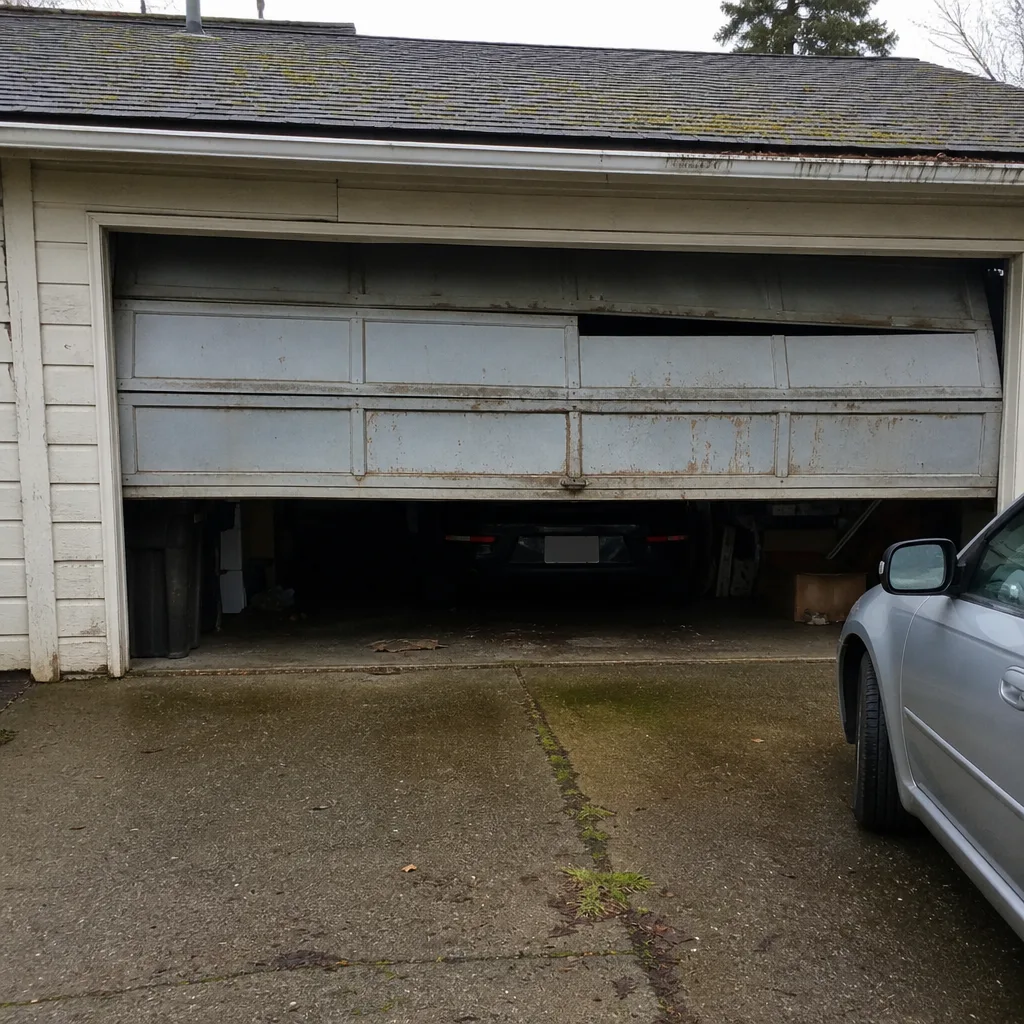 Before
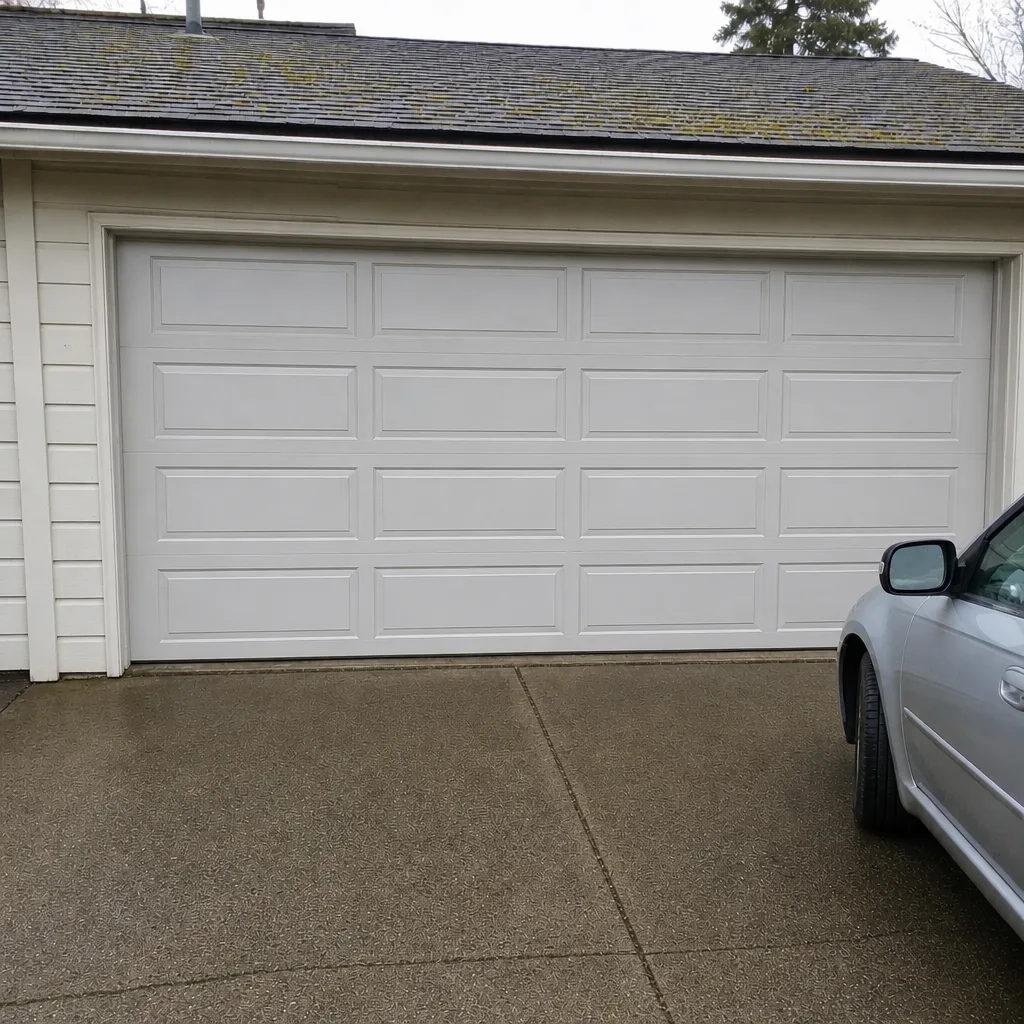 After
When to Call a Professional
Some garage door problems are safe to inspect and fix yourself; others carry real risk. Call a professional if you hear a loud crack from the garage, if the door won’t stay up on its own, if the door is hard to lift by hand, if a cable is frayed or visibly damaged, if the door is off its track, or if the opener behaves erratically even after you’ve cleared the vents and checked the sensors. Spring repair, cable work, and anything that involves a door that’s dropped off the track should go straight to trained technicians. Kent Garage Door Repair Co offers free estimates in Kent with fast dispatch from 7am to 7pm, and we answer 24/7. Call (866) 937-7308 to get a straight answer about what your door needs.
Frequently Asked Questions
Twice a year is the right schedule for most Kent homes, timed to late September before the wet season and late August after the dry heat. A monthly ten-minute inspection in between catches small problems early and keeps the spring and opener checks on schedule. If you skip a season, you’ll usually find the gap in the October seal check or the August opener check.
Probably, and it’s the most common heat-related garage door problem we see in Kent. Logic boards misread their sensors when they get hot, which looks like an opener that randomly stops, reverses, or loses remote pairing. Clear the vents, give the unit some airflow, and get it diagnosed if the symptoms persist on a cool morning. Don’t replace a connected opener over a late-summer dropout involving a LiftMaster, Chamberlain, Genie, or Craftsman model until a technician has checked the board. Call (866) 937-7308 for a free estimate on the repair.
The bottom seal and weatherstripping show it first, specifically the wood-composite and rubber seals along the floor line. Rapid humidity swings between dry August and wet October crack wood bottom seals and dry out the side stripping, and that’s where water gets in. Check both in late September, before the sustained rain starts.
No, and this is the most common maintenance mistake we see. Galvanized tracks should stay dry and clean. Oils and greases attract grit and turn the rollers into a sticky mess. Lubricant belongs on the hinges, rollers, and torsion bearings, not the track rails. If you’ve already sprayed the track, wipe it clean and leave it bare. If the door is still dragging, call for a free estimate at (866) 937-7308.
A force balance check tells you whether the springs are doing their job: disconnect the opener, lift the door halfway, let go, and see if it holds. It’s a safe homeowner check. A spring repair is what happens if the balance check tells you the springs are tired, and that’s a trained-technician job with proper tools. Don’t try to adjust or replace the springs yourself. Our technicians have up to 15 years of experience with this exact work.
Most Kent garage door problems are repairable, and a worn seal, a single bad spring, or a heat-stressed board doesn’t call for a new door. Replacement makes sense when multiple panels are failing, the door has come off the track more than once, or you’ve replaced the same hardware repeatedly. A free estimate gives you a straight answer before you commit either way. Call (866) 937-7308 for the estimate.
The Bottom Line
Kent’s garage door care shouldn’t follow a generic four-season schedule. The two transitions that matter are the October wet-season onset and the late-August dry-heat peak. Prep the seals, weatherstripping, and cables before the rain settles in, then give the opener and springs a heat-recovery check before summer peaks. Run a ten-minute monthly inspection in between, and leave the spring and opener work to trained technicians. That’s the year-round routine that actually fits a Kent home, from the valley floor to the older neighborhoods downtown. For a free estimate on any repair or installation, call (866) 937-7308.
If you need a full-service garage door company to handle the checks and any repair that turns up, Kent Garage Door Repair Co covers repair, opener repair, spring repair, and new installation across the brands you already own. Call (866) 937-7308. We answer 24/7. Fast dispatch from 7am to 7pm, Sunday through Friday.
Written by the team at Kent Garage Door Repair Co.