
Last updated November 21, 2026
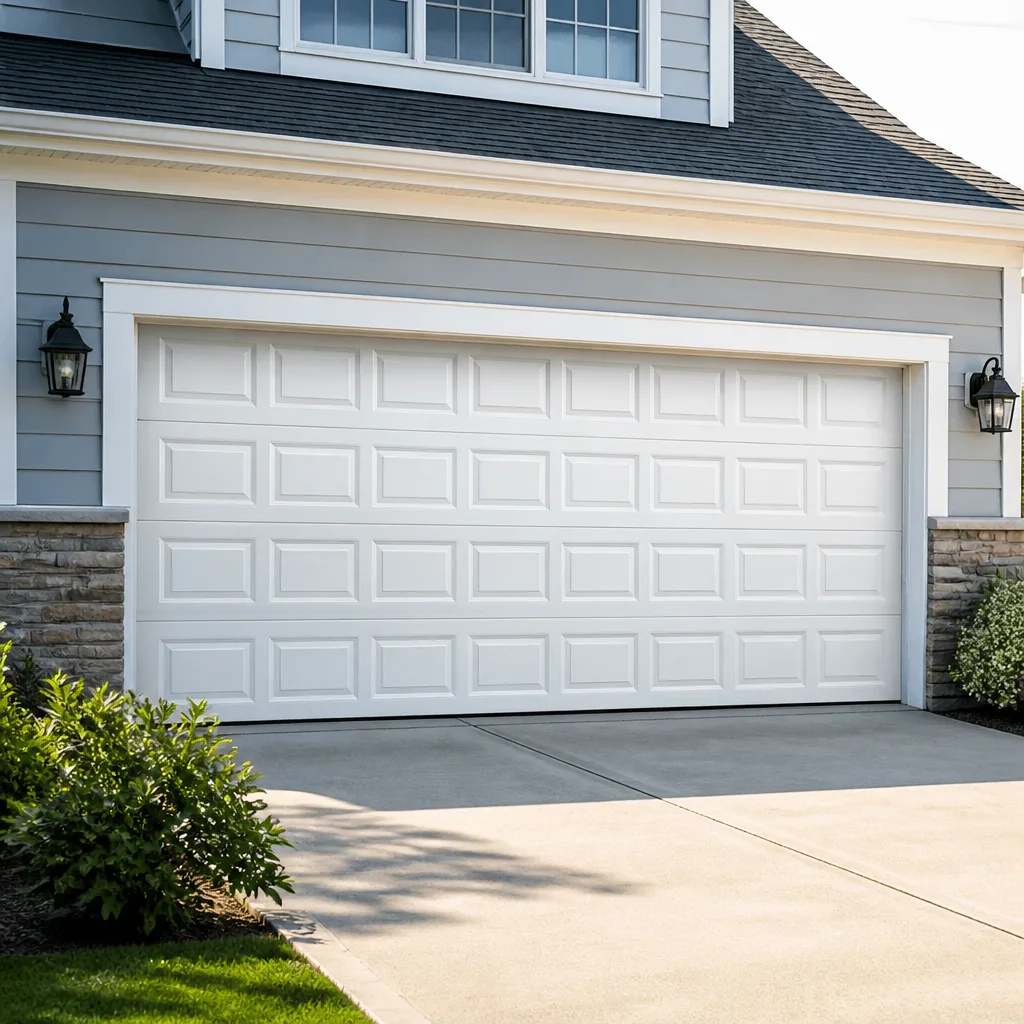 Raised-panel steel
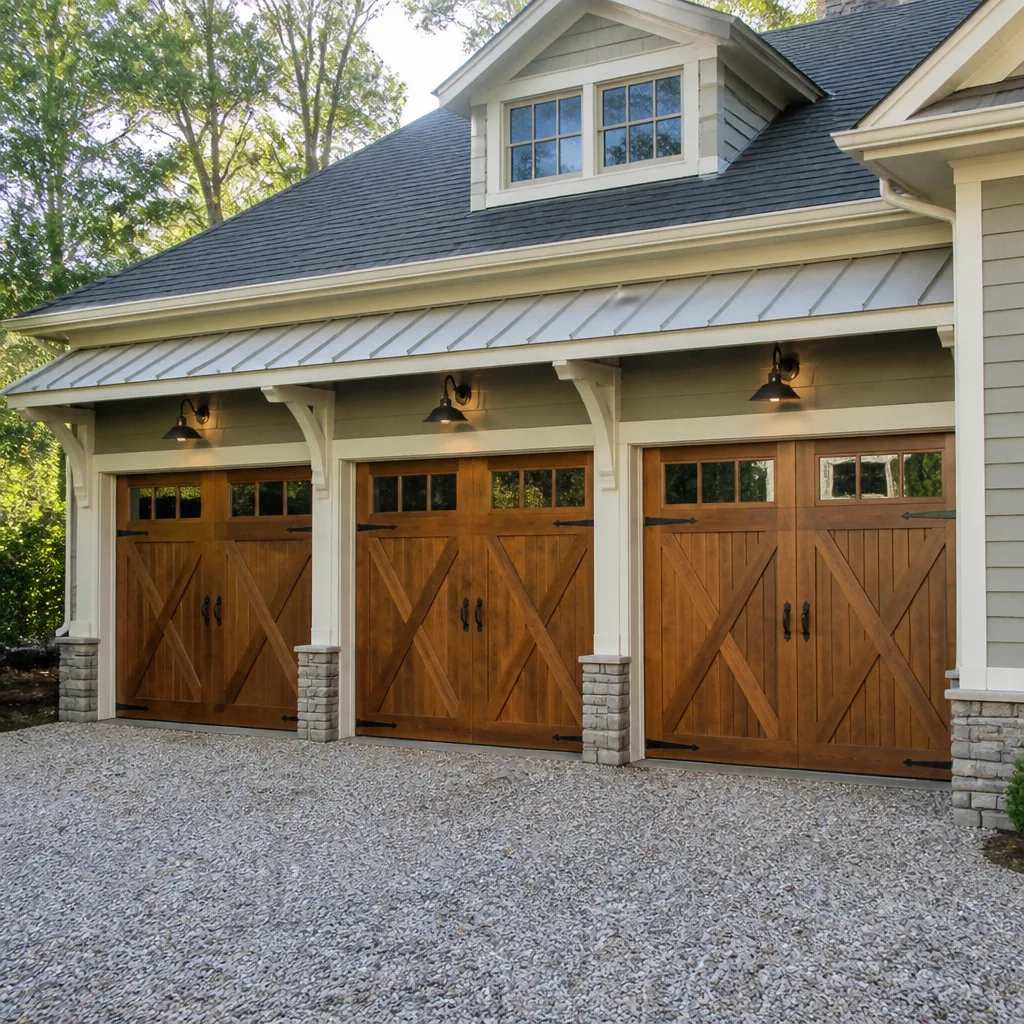 Carriage house
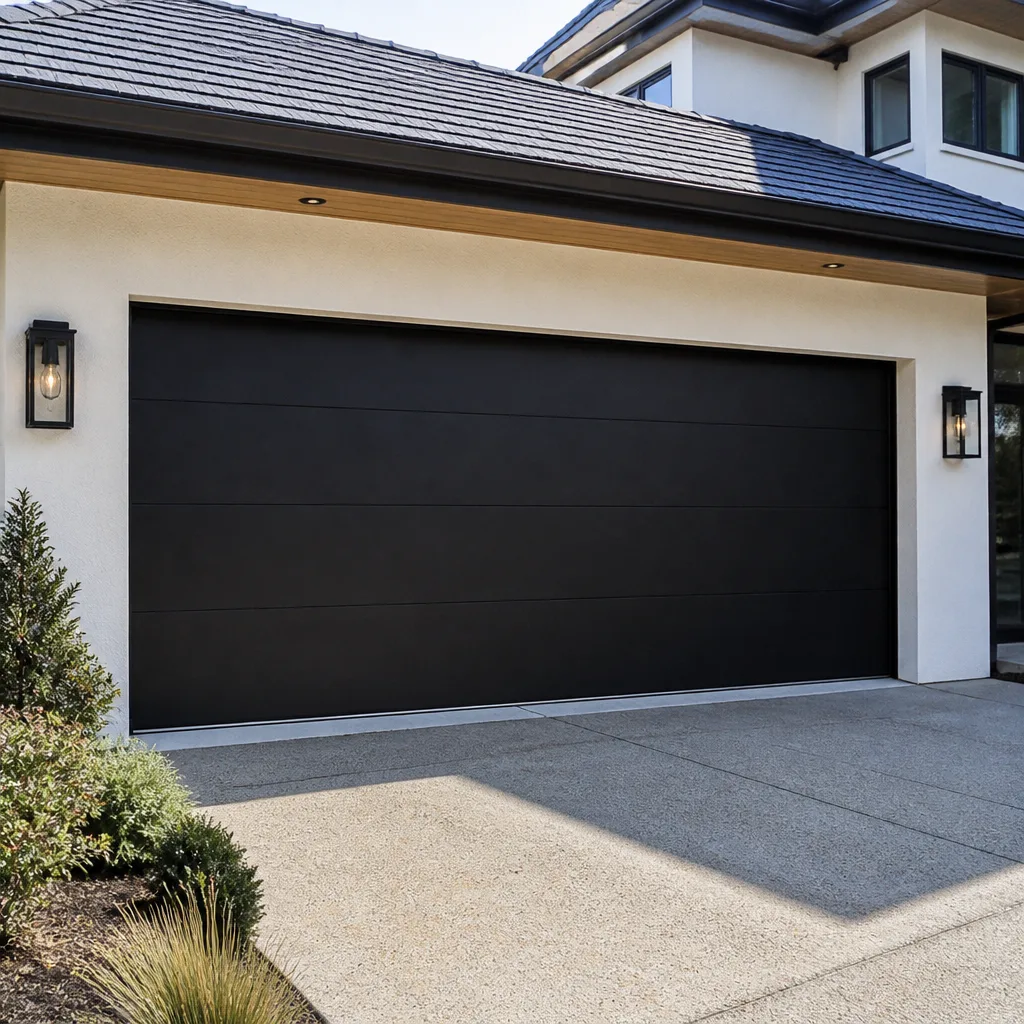 Modern flush
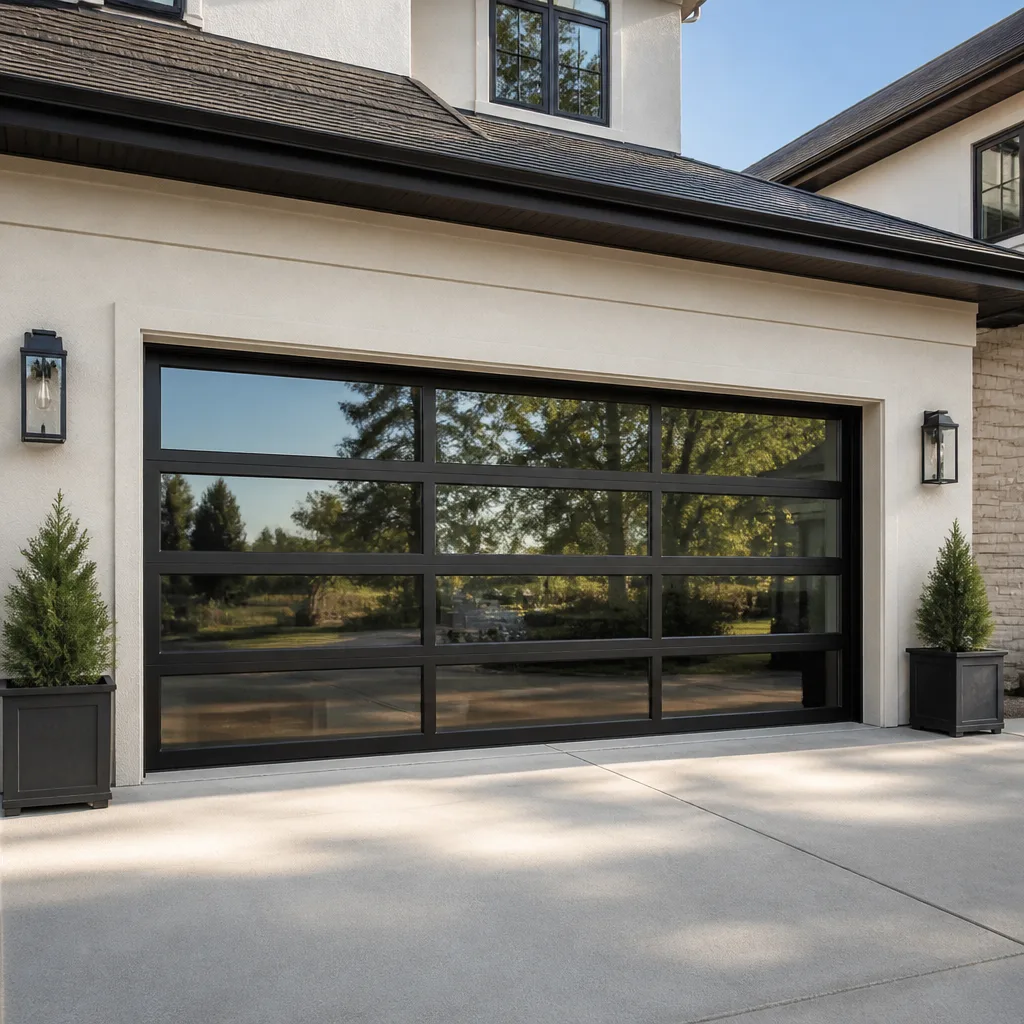 Full-view glass
 LiftMaster openers
 Chamberlain openers
Full 25-point door and opener safety check with every visit - springs, cables, rollers, tracks, and your LiftMaster or Chamberlain opener included
You get a price before we start. It does not change when the pro arrives.
Get your free estimateThe Complete Guide to Garage Doors in Kent
Most garage door advice you’ll find online was written for a national audience and doesn’t account for what actually happens to doors here. Kent sits in a rain shadow gap where wet marine winters give way to dry summer heat, and that swing stresses springs, cables, and opener hardware in ways a guide written for Phoenix or Minneapolis will never mention. Add a housing stock built mostly between the 1980s and the 2000s, and you get door sizes, header clearances, and insulation needs that are specific to this valley. This guide covers all of it: how to read a failing door, what replacements really cost in Kent, which brands dominate local neighborhoods, and when a permit is actually required.
Quick Answer
Garage door problems in Kent usually come down to one of four things: a broken spring, a frayed cable, a failing opener, or a door that’s reached the end of its service life. Most of these are repairable, and repair is almost always cheaper than replacement. A full replacement in Kent typically runs from about $1,100 for a basic single door to well over $3,500 for a custom insulated double, while a spring or cable repair usually lands between $180 and $400 per spring. The written estimate you get before work starts is the price you pay.
Styles & brands we work with
- Raised-panel steel
- Carriage house
- Modern flush
- Full-view glass
- LiftMaster openers
- Chamberlain openers
Table of Contents
- How Kent’s Climate Wears Out Garage Doors
- Kent’s Housing Stock and What It Means for Your Door
- Why R-Value Matters Differently in Kent
- Which Garage Door Brands You’ll Find in Kent Neighborhoods
- Permits, Repairs, and Like-for-Like Swaps
- The Real Cost Ladder for Kent Garage Door Work
- What You Can Safely Check Yourself
- Repair or Replace? How to Decide
How Kent’s Climate Wears Out Garage Doors
Kent sits in a rain shadow gap between the Cascade foothills and the Puget Sound lowlands, which means the valley swings harder between wet and dry than most of western Washington. Winters bring steady moisture and temperatures that hover near freezing. Summers dry out fast, with stretches of heat that push wood and vinyl to expand and contract. That constant back-and-forth is what quietly destroys garage door hardware here.
The parts that suffer most are the ones under tension. Steel springs cycle through expansion and contraction every time the door opens and closes, and the moisture in the air accelerates surface corrosion on cables and hinges. Wood doors absorb water along the bottom panel and swell, then dry and crack. Vinyl weather seals harden and pull away from the frame. By the time a homeowner notices the door is noisy or slow, the wear has usually been building for a couple of seasons.
What this means for maintenance
In a climate like Kent’s, the single most useful habit is a twice-yearly inspection: once in late fall before the wet season, once in late spring after it. Check the springs for gaps or a stretched look, the cables for fraying or rust, the hinges for looseness, and the weather seal along the bottom for cracks. Lubricate the moving parts with a garage-door-specific lubricant, not WD-40. A door that’s been maintained this way typically lasts years longer than one that’s ignored until something snaps.
When a door does fail, the fix depends on what broke. A snapped torsion spring, a cable that’s jumped its drum, or an opener that’s lost its logic board all call for different work. Our garage door repair technicians handle all of it, and the diagnostic visit is where the real answer gets made: repair versus replace, priced before anything starts.
Kent’s Housing Stock and What It Means for Your Door
Most of Kent’s residential neighborhoods were built between the early 1980s and the late 2000s. That matters because door sizes and header clearances were standardized differently across those decades. A door installed in a mid-1980s East Hill rambler is often a 16-foot-wide double door with a lower header than a 2005 build in a newer subdivision. When you’re replacing a door, the rough opening matters as much as the door itself.
The size problem most guides skip
Standard residential garage doors come in two common double widths: 16 feet and 18 feet. Most Kent homes built in the 1980s and 1990s use 16-foot doubles. Homes from the late 1990s onward increasingly use 18-foot doubles, especially where builders wanted room for two full-size vehicles plus storage. Single doors are usually 8 or 9 feet wide. If you’re replacing a door and you don’t measure the rough opening, you can end up with a door that doesn’t fit the frame you have.
Header clearance is the second issue. A torsion spring system needs vertical space above the door for the shaft and drums. Some older Kent homes have tight headers that can handle an extension spring setup but not a torsion conversion without modification. A technician measuring for a replacement will check the headroom, the side clearance, and the backroom (how far the door travels back into the garage) before recommending a door.
What this means for you
If you’re planning a replacement, get the opening measured in person before you shop. A door that’s the wrong width or requires structural modification to fit is a far more expensive problem than one that simply needs a new panel. For most Kent homes, the right answer is a door sized to the existing opening with the same spring system already in place. That’s the shortest path to a working door without a construction project attached.
Why R-Value Matters Differently in Kent
Insulation is the single most oversold feature in garage door sales, and in Kent the calculation is different from what colder inland cities need. Kent’s winters are mild by Washington standards: the valley rarely sees the hard freezes that hit Spokane or Yakima, so a garage door doesn’t have to fight the same temperature differential. What it does have to handle is moisture. A poorly sealed door lets damp air into the garage, which is a bigger problem here than heat loss.
The honest breakdown
- Uninsulated steel door: fine for a detached or unheated garage where the door is mostly a security barrier. It will sweat in cold weather and doesn’t hold temperature, but it’s the cheapest option and it works.
- Single-layer insulated door (polystyrene core): a reasonable middle step if the garage shares a wall with living space or holds a workshop. It reduces condensation and takes the edge off temperature swings.
- Double-layer or polyurethane-core door: worth the money if the garage is conditioned, if there’s a room above it, or if you spend real time out there. Polyurethane holds up better to moisture than polystyrene over the long run.
- Wood or wood-composite door: beautiful, but in Kent’s wet-dry cycle they need annual sealing. If you’re not going to maintain them, choose a steel or composite door instead.
The mistake we see most often is paying for a high-R-value door on an unheated detached garage where the insulation has no thermal job to do. Spend the money on a better weather seal and a properly adjusted door instead. That’s where the return actually is in Kent.
Which Garage Door Brands You’ll Find in Kent Neighborhoods
Walk through most Kent neighborhoods and you’ll see the same handful of brands repeated: Clopay, Amarr, Wayne Dalton, and Genie, with LiftMaster and Chamberlain openers on a large share of homes. That’s not an accident. Builders working in the valley during the 1990s and 2000s standardized on a small set of manufacturers, and most of those doors are still on the homes today.
Why brand matters for parts
Brand matters more than most homeowners realize, because the brand on your door determines what parts you can get and how quickly. A Clopay door uses specific panel profiles and hardware that don’t interchange with an Amarr door. An opener from LiftMaster or Chamberlain uses components that a technician familiar with those brands can diagnose and repair without guessing. This is why we’re certified to service eight of the major brands installed in Kent: LiftMaster, Chamberlain, Genie, Clopay, Amarr, Wayne Dalton, Craftsman, and Raynor. When a technician arrives familiar with the hardware on the job, the diagnosis is faster and the fix is more likely to be a repair rather than a replacement.
What to check on your own door
Look for a sticker or plate on the inside of the door panel or on the opener housing. That’s usually where the brand is printed. If you can’t find it, the panel profile and the spring type will tell a technician what family the door belongs to. Knowing the brand before you call means the technician can bring the right parts or order them faster. It also keeps you from being sold a full replacement when a specific part is what’s actually needed.
If your opener is the part that’s failing, our garage door opener repair work covers the smart-home-compatible models from LiftMaster, Chamberlain, and Genie that are common in Kent, along with the older Genie and Craftsman units still running in older homes.
Permits, Repairs, and Like-for-Like Swaps
One question we field constantly in Kent: does a garage door replacement need a permit? The answer depends on what’s actually being done. A repair or a like-for-like swap of a door into the same opening usually doesn’t trigger an inspection. A replacement that changes the size of the opening, alters the header, adds structural framing, or converts from an extension spring to a torsion system may require a permit, because that work touches the structure of the home.
How to know which side of the line you’re on
- Repair: replacing a spring, cable, roller, hinge, or opener on an existing door. No permit needed in most cases, and no inspection.
- Like-for-like replacement: putting a new door into the same opening with the same spring system. Often no permit required, but check with the city.
- Modified replacement: changing the door size, moving the track, altering the header, or converting spring systems. This usually needs a permit and an inspection.
We don’t guess on this. The Kent building department is the authority on what needs a permit for your specific address, and a quick call there before you schedule work will settle it. If your project does need a permit, the contractor doing the work should be pulling it. If a company tells you a structural change doesn’t need a permit, that’s a reason to ask more questions.
The Real Cost Ladder for Kent Garage Door Work
Costs for garage door work in Kent sit in a moderate range compared to the broader Puget Sound market: labor here is lower than Seattle or Bellevue but higher than rural parts of the state. The table below gives typical estimated ranges, not exact prices. The written estimate you receive before work starts is what sets the final number.
- Cable replacement: $150 – $300 per door
- Torsion or extension spring repair: $180 – $340 per spring (a matched pair is usually replaced together, so a pair costs about twice the single-spring range)
- Roller and hinge replacement: $100 – $250 per door
- Opener repair: $150 – $350, depending on the part
- Opener replacement (unit installed): $350 – $650
- Panel replacement (single panel): $200 – $500 depending on brand and profile
- Full door replacement, single uninsulated: $1,100 – $1,800
- Full door replacement, double insulated: $1,800 – $3,500
- Full door replacement, double custom: $3,500 – $6,000+
A few things move a job up or down the ladder. A door that needs structural framing to fit a new size will cost more than a like-for-like swap. A custom or wood door will run higher than steel. An opener replacement at the same time as a door replacement usually costs less than doing them separately, because the technician is already on site.
What the estimate covers
Every job we quote gets a written estimate that states the scope, the parts, and the price before any work starts. You’ll know what the job costs before a technician picks up a tool. If the job turns out to be something different once the door is opened up, we’ll talk to you about the change before doing the additional work, not after. For installation and replacement, the process starts with a free measure and a written price, because that work has to be measured and ordered before it can be scheduled. Learn more about garage door installation if you’re at that stage.
What You Can Safely Check Yourself
Some garage door maintenance is safe for a homeowner with basic tools. Some of it isn’t, and the unsafe parts are the ones most likely to send someone to the emergency room. Here’s the honest line.
Safe to do yourself
- Lubricate hinges, rollers, and tracks with a garage-door lubricant.
- Test the safety reverse: put a piece of wood flat on the floor under the door and close it. The door should reverse on contact.
- Check the balance: pull the release, lift the door halfway, and let go. It should stay put. If it drops or rises, the springs need attention.
- Wipe down the weather seal and check for cracks.
- Listen for grinding, squealing, or popping when the door runs.
Not safe to do yourself
Torsion springs and cables are under extreme tension at all times. They are the most dangerous part of a garage door system, and they can’t be safely handled without the right tools and training. If a spring has snapped or a cable has come loose, don’t try to lift the door or untangle anything. Call a trained technician. Our technicians have up to 15 years of experience with this exact work, and spring repair is a two-person job with proper tools for a reason.
Repair or Replace? How to Decide
The default answer for most garage doors is repair. A door with good panels, a sound frame, and a working opener that needs new springs is not a candidate for replacement. That’s the repair-first approach, and in our experience it saves homeowners real money over the alternative.
Repair is usually the right call when:
- The door panels are intact and only hardware has failed.
- The door is under 15 years old and the frame is sound.
- A single spring, cable, or roller needs replacing.
- The opener is failing but the door itself is fine.
Replacement is usually the right call when:
- Multiple panels are dented, rusted through, or water-damaged.
- The door has been repaired repeatedly and keeps failing.
- You’re remodeling and want a different look or insulation level.
- The door is a wood unit that’s rotted along the bottom panel.
When you call, a technician will assess it and tell you which side you’re on. The point isn’t to sell you a door. The point is to get you a working one, back up and running, at the lowest cost that actually solves the problem.
Common Mistakes to Avoid
- Skipping the rough opening measurement. Ordering a door by nominal size without checking the actual opening is the most common cause of a replacement that doesn’t fit. Always measure before you order.
- Paying for high-R-value insulation on an unheated detached garage. The insulation has no thermal job to do there. Spend the money on a better weather seal and a properly balanced door instead.
- Assuming a replacement always requires a permit. A like-for-like swap often doesn’t, while a size change or header modification usually does. Call the Kent building department and find out for your address.
- Replacing an entire door when only the springs failed. Springs fail with age and use on doors that are otherwise perfectly sound. Repair first unless there’s a real reason to replace.
- Trying to fix a torsion spring yourself. This is the mistake with the highest personal risk. Springs are under tension, and the tools and training to handle them safely are not homeowner equipment.
- Ignoring the opener’s brand. A LiftMaster, Chamberlain, or Genie opener uses specific parts. Knowing the brand before you call makes the repair faster and less expensive.
- Putting off a slow or noisy door. In Kent’s climate, small problems grow fast. A noisy roller or a stiff spring is a warning, not an inconvenience.
See the difference
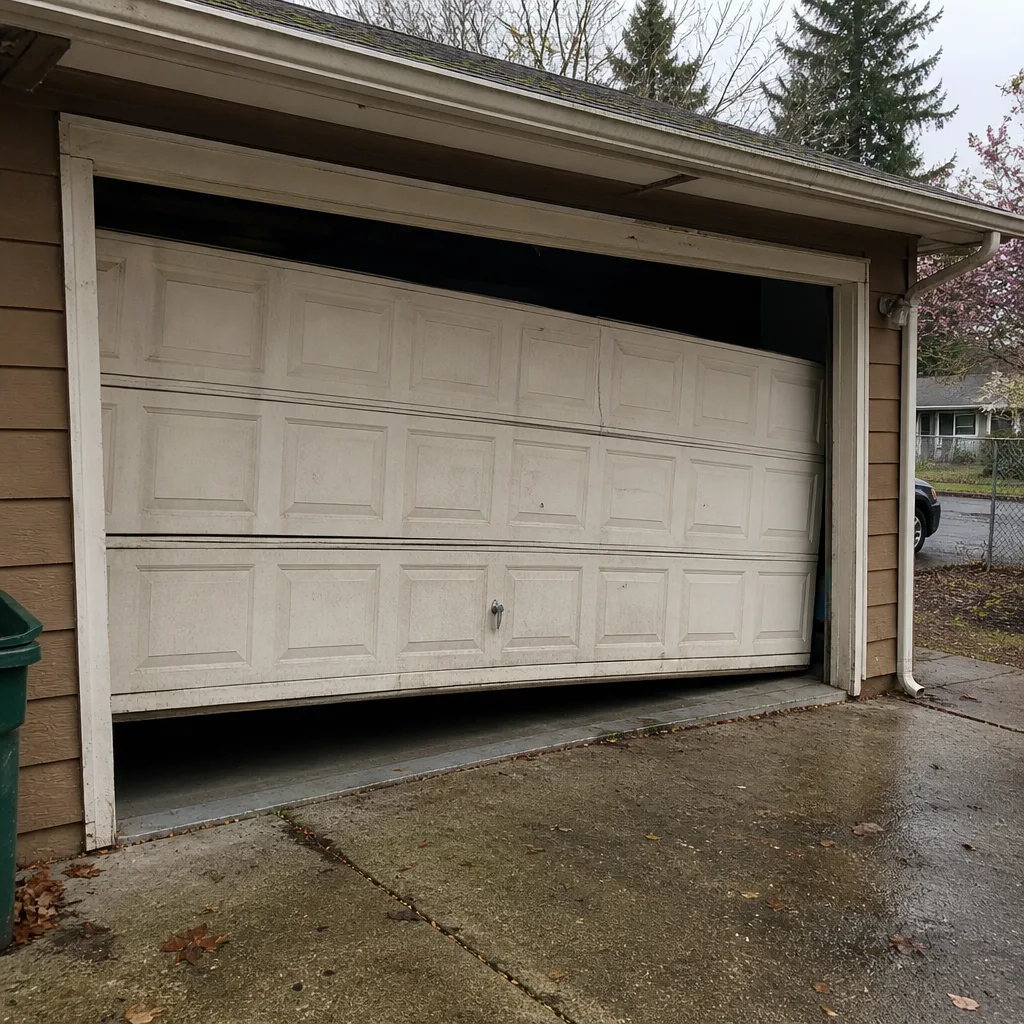 Before
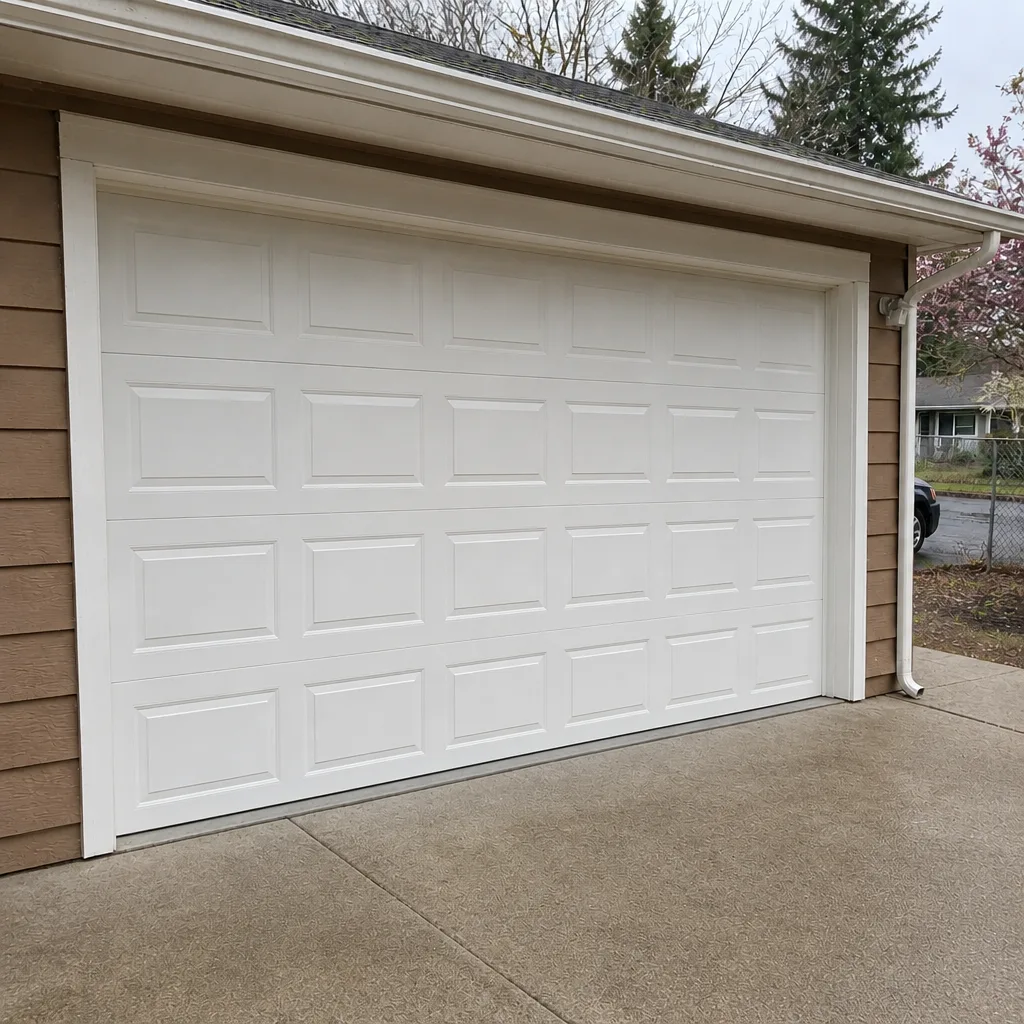 After
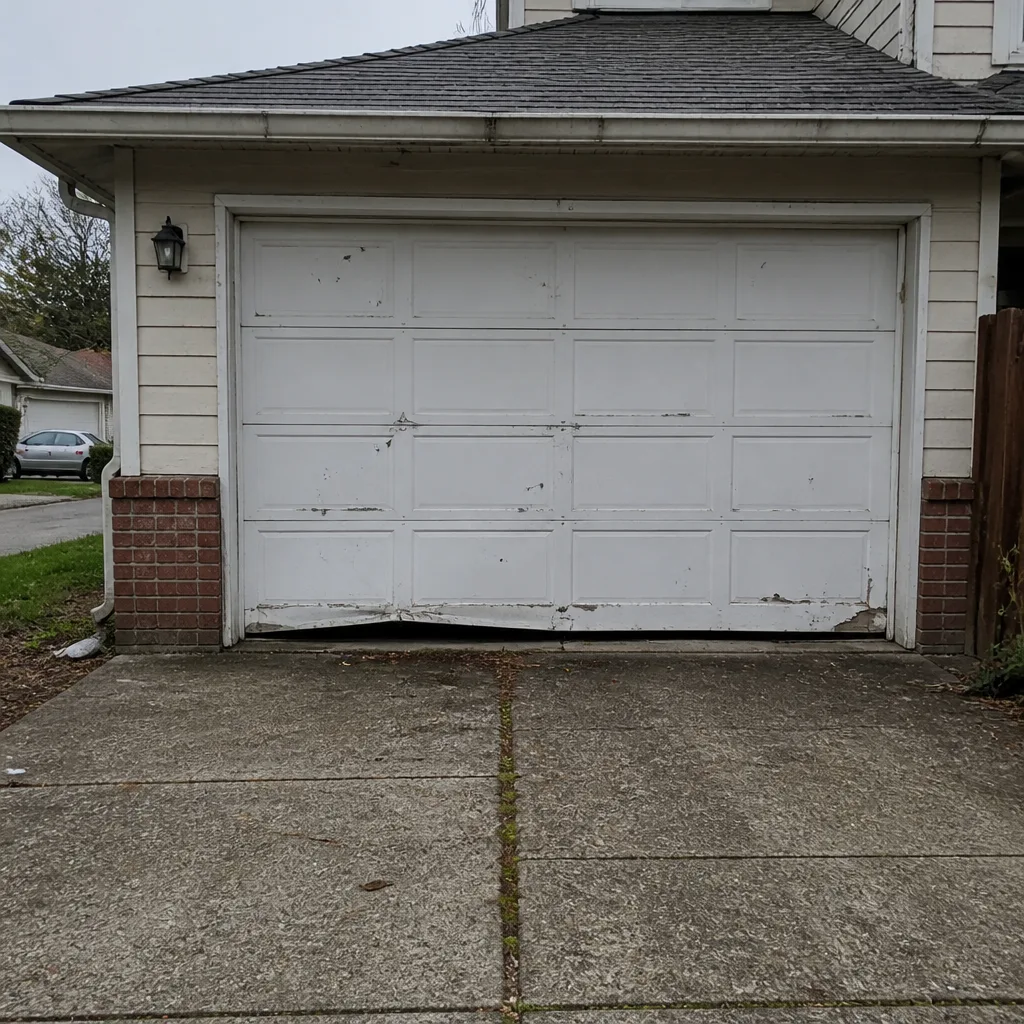 Before
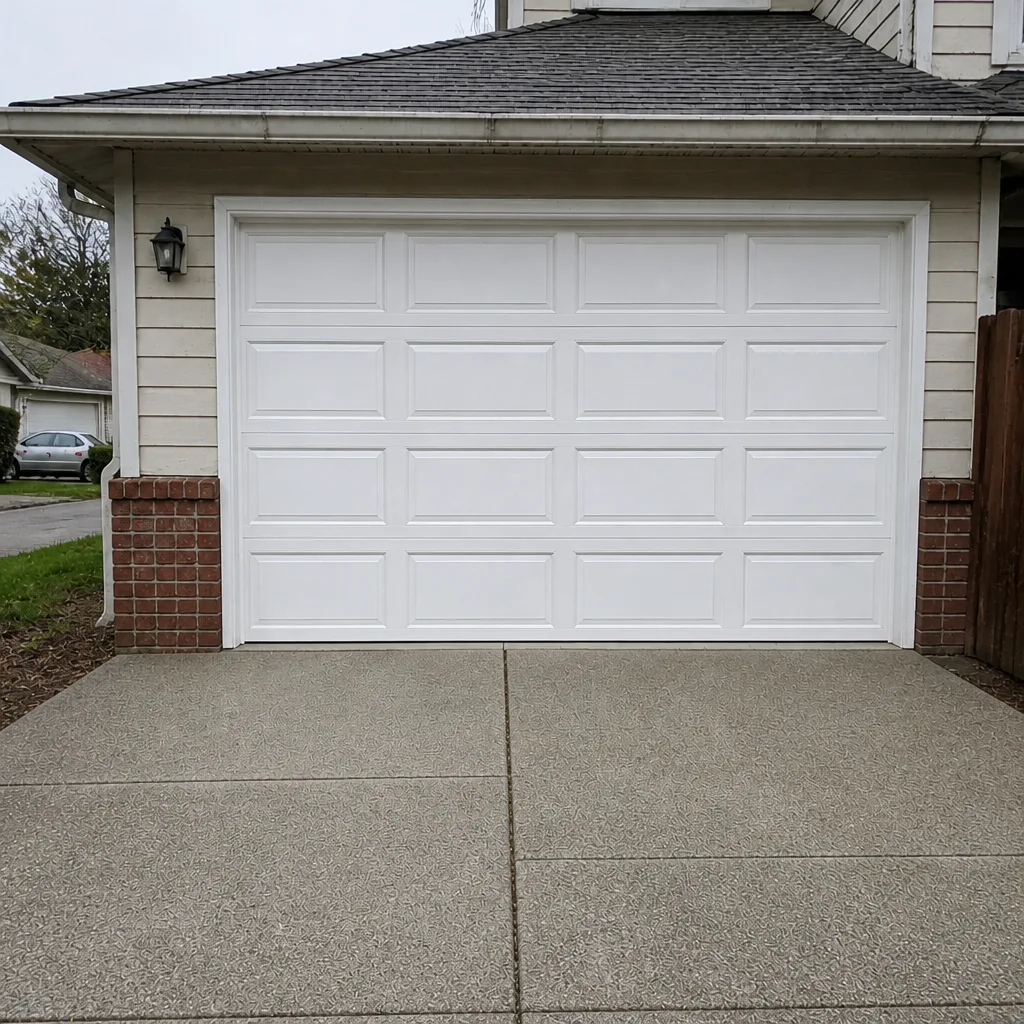 After
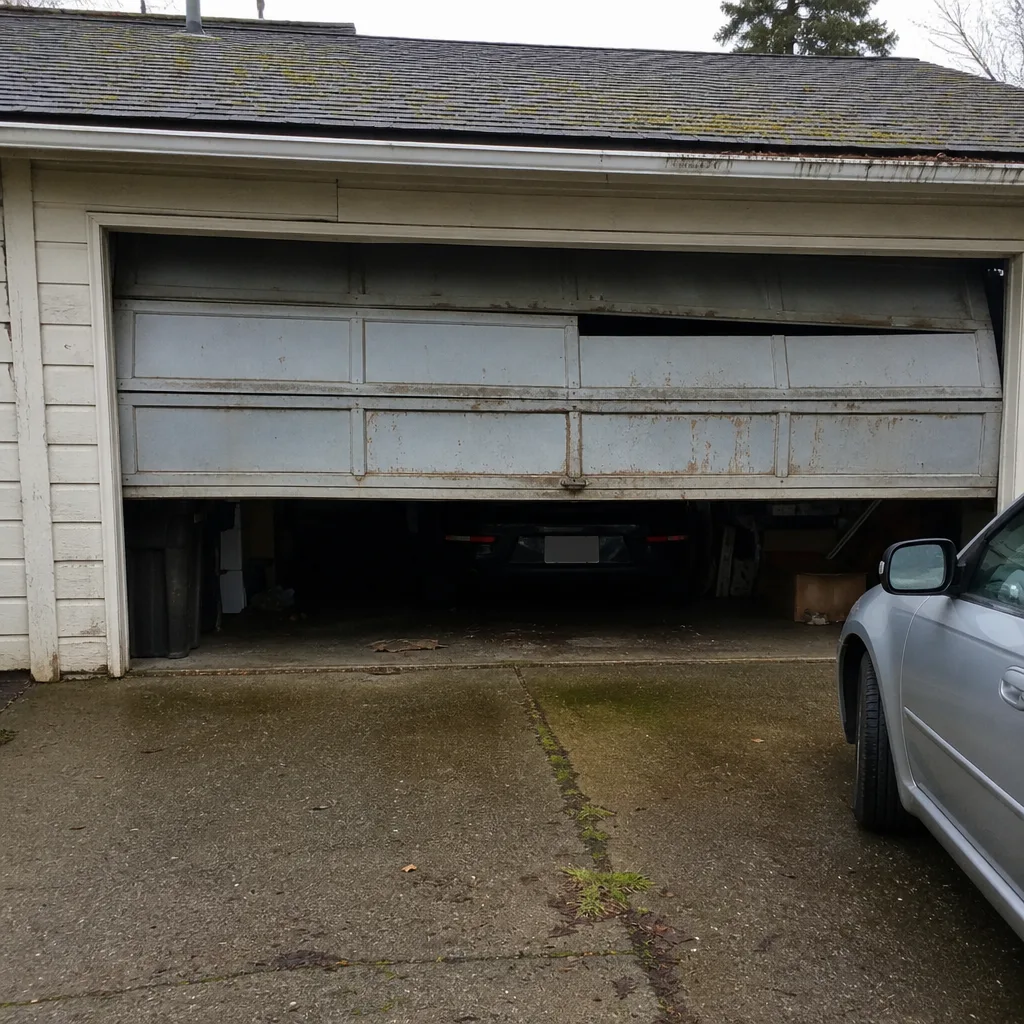 Before
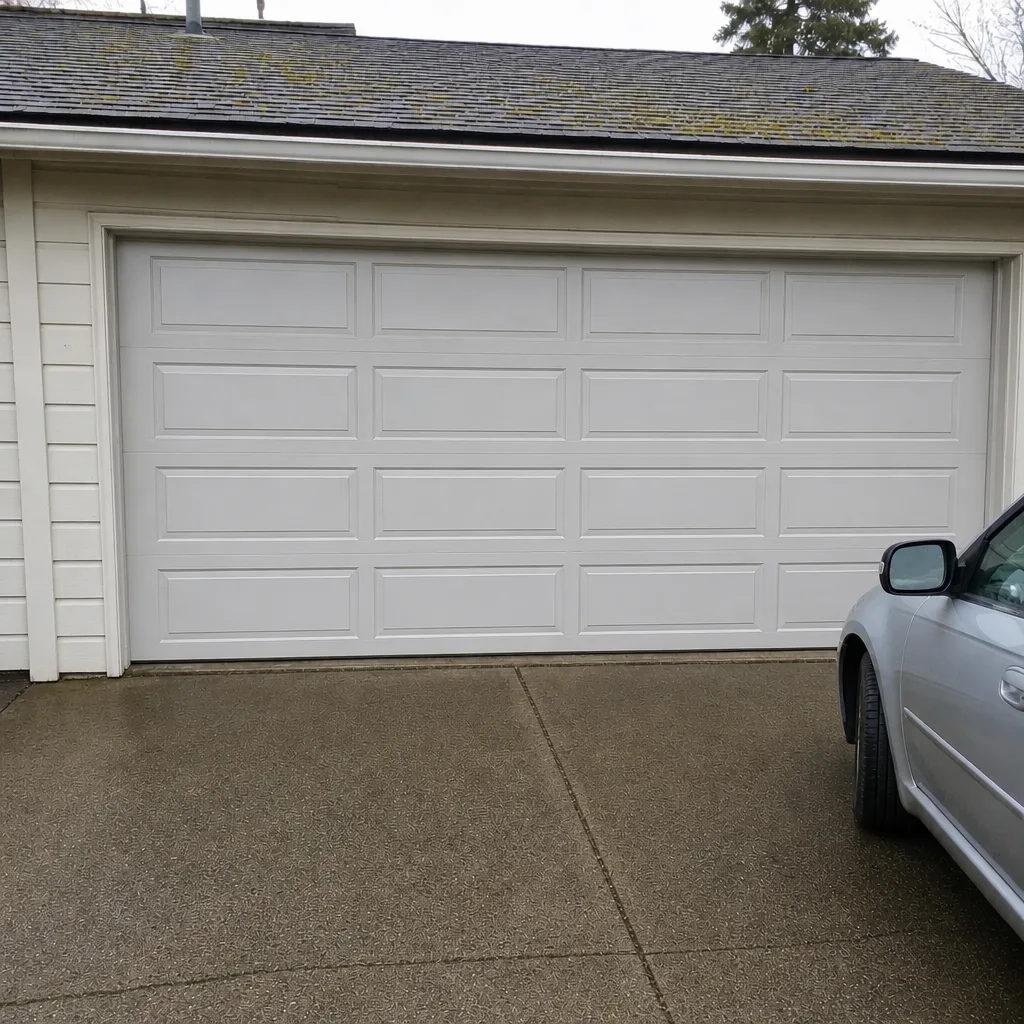 After
When to Call a Professional
Call a professional when the door won’t open or close, when you hear a loud pop from the spring area, when a cable is visibly frayed or hanging loose, when the door is off its track, or when the opener runs but the door doesn’t move. Those are all signs the door needs a trained technician, not a weekend repair. Spring and cable work in particular carry real risk, and no homeowner should attempt it. If your home is unsecured because the door is stuck open, or your vehicle is trapped because the door is stuck closed, emergency service is available. Kent Garage Door Repair Co offers free estimates in Kent, and we answer 24/7 with fast dispatch from 7am to 7pm, Sunday through Friday. Call (866) 937-7308.
Frequently Asked Questions
Spring repair in Kent typically runs $180 – $340 per spring, and most doors have a matched pair that’s replaced together at roughly twice that. The exact price depends on the spring type and the door’s weight. Call (866) 937-7308 for an exact quote; estimates are free.
In most cases, yes. We offer same-day service for doors that have failed and emergency service for homes that are unsecured or have a trapped vehicle. We answer 24/7 with fast dispatch from 7am to 7pm, Sunday through Friday. A call outside dispatch hours is booked into the next opening.
A like-for-like swap often doesn’t require a permit, but a replacement that changes the door size, alters the header, or converts spring systems usually does. The Kent building department is the authority for your address, so a quick call there before you schedule work settles it.
No. The written estimate states the scope and the price before any work starts, and that’s what you pay. If the job turns out to be different once the door is opened up, we talk to you about the change before doing any additional work, not after.
The local professionals we connect you with are licensed and insured as their state requires. Our technicians have up to 15 years of experience across the major brands installed in Kent, including LiftMaster, Chamberlain, Genie, Clopay, Amarr, Wayne Dalton, Craftsman, and Raynor.
Most Kent homes already have a Clopay, Amarr, Wayne Dalton, or Genie door, and replacing with the same brand family keeps parts availability straightforward. The right choice depends on your opening size, insulation needs, and budget. A free measure and a written price will narrow it down.
The Bottom Line
Kent’s climate and housing stock make garage door decisions more specific than a national guide can handle. The wet-dry swing wears out springs and cables faster than the temperature alone would suggest. Homes built between the 1980s and 2000s have door sizes and header clearances that need measuring before you shop. Insulation is worth paying for only when the garage has a thermal job to do. Brand matters for parts, and a repair-first approach saves money in the majority of cases. Get a written estimate before work starts, and know which side of the permit line your project is on before you schedule.
If your door is failing, or you’re planning a replacement and want a real number, call Kent Garage Door Repair Co at (866) 937-7308 for a free estimate. Our Kent Garage Door Repair Co team works on the brand you already have, and we’ll tell you straight whether it’s a repair or a replacement.
Written by the team at Kent Garage Door Repair Co.